Introduction
The VACSAFE project is an online digital alternative to the paper vaccination record. It aims to solve the inherent problems of this format, such as document loss, and offers the patient new features like sharing records or tracking their vaccinations in line with the recommended vaccination schedule.
The end-to-end encryption technology used by VACSAFE ensures that these benefits do not come at the expense of data protection: only the patient and the people they choose can access their data. This excludes the application server operators from having any information about the patient's data (principle of zero-knowledge ¹). The security mechanisms of the application can be transparently verified as the code is published (open-source).
Moreover, the patient does not need to create an account in the application, thus remaining anonymous. Access is exclusively given through a key expressed as a QR code. This is provided when creating the VACSAFE record.
The VACSAFE application aims to be universal and free. Ultimately, it aims to offer an interface in multiple languages and integrate the specifics of national vaccination systems. By offering an intuitive tool, close to the traditional vaccination record in its operation, it addresses a wide audience. The simple and robust operation of the application and the associated low costs ensure its free use.
¹ The principle of zero-knowledge prohibits transferring user information without first encrypting it with a key that only the user possesses. In the specific case of VACSAFE, this means that vaccination data on the server side is only readable after being downloaded and decrypted. Similarly, no information used during the data preparation or processing process transits through the server; it remains on the client side. The VACSAFE application is built on the secure ZKFS platform by PBG System.
Application Presentation
The version of the application proposed for the first iteration (hereinafter basic application) offers the following features:
- Use without account creation with QR-code access
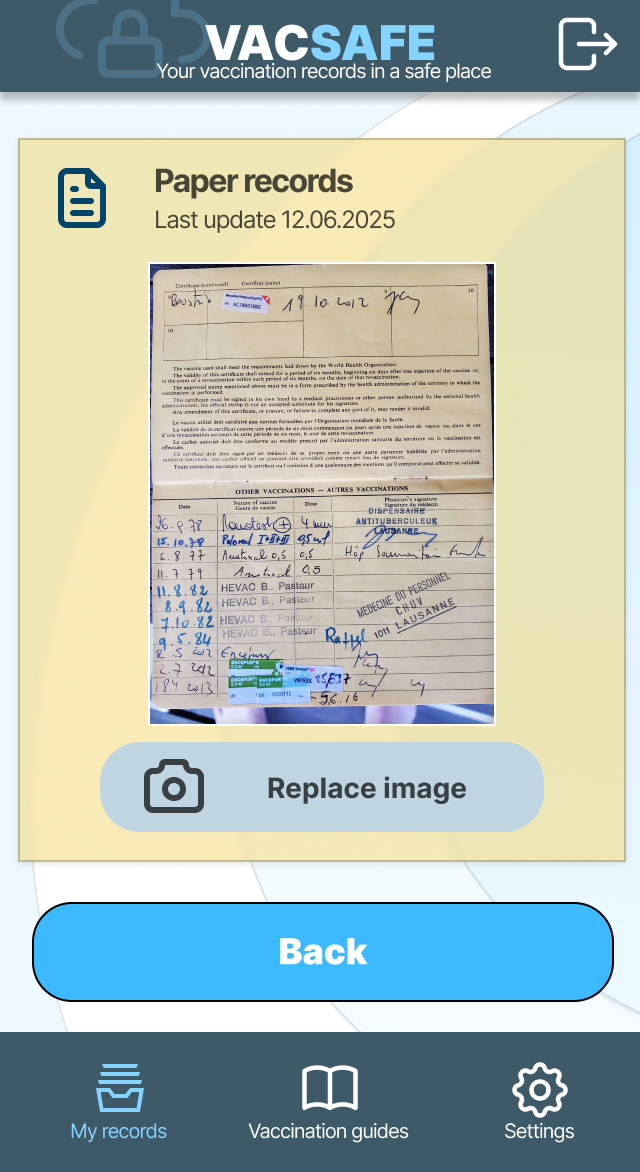
- Import of the paper vaccination record
- Add vaccination from a photo and the entry of structured information
- Consultation of the vaccination record
- Access to guides and information regarding vaccination
Possible extensions to the features of the basic application are described further on.
Below is a more detailed presentation of the features planned in the basic application.
The corresponding demonstration prototype is also directly viewable, as is its flow chart.
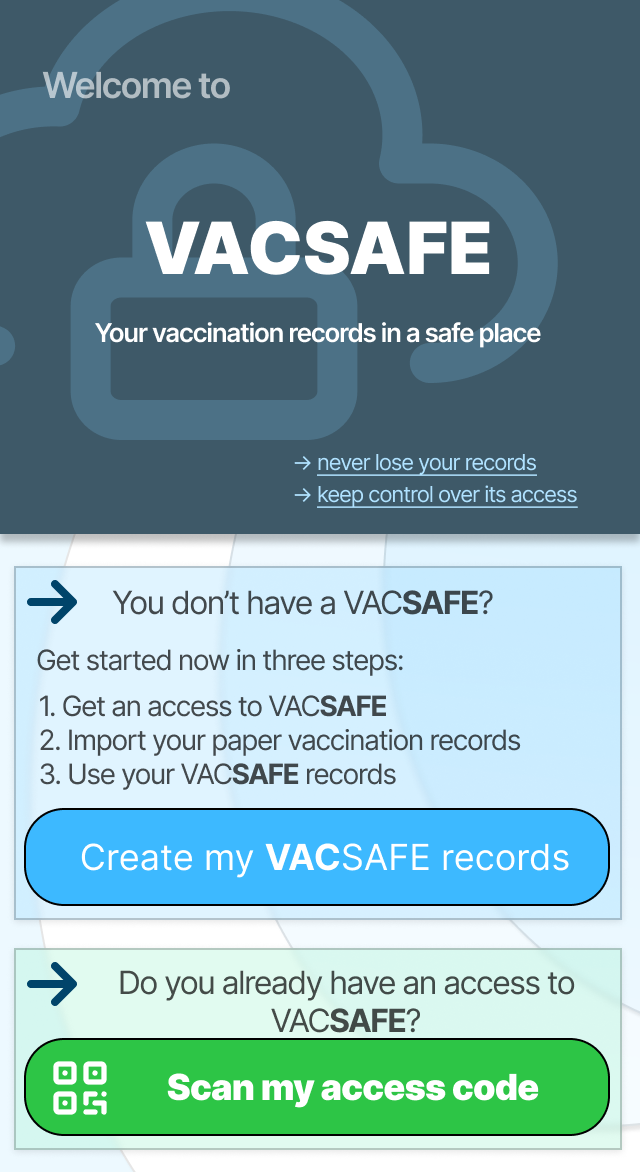
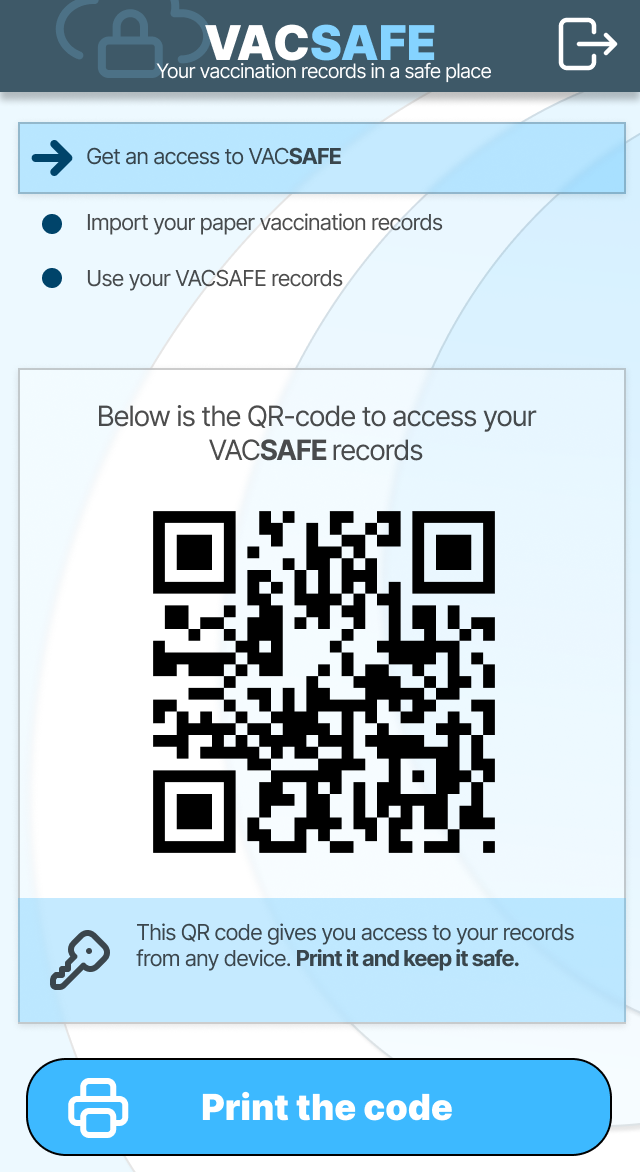
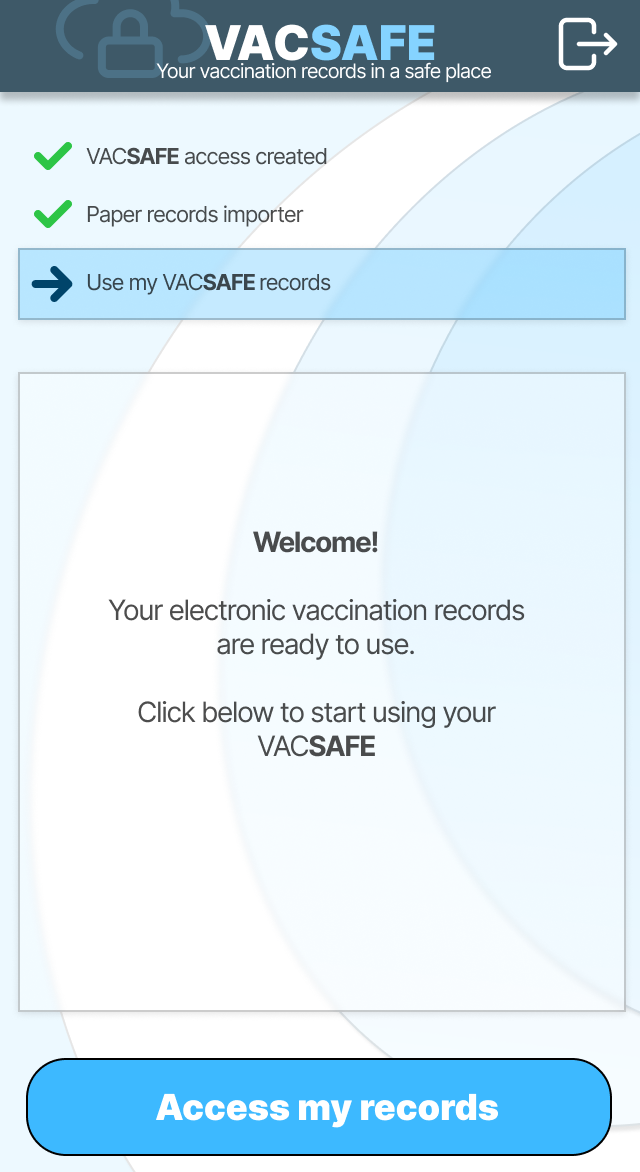
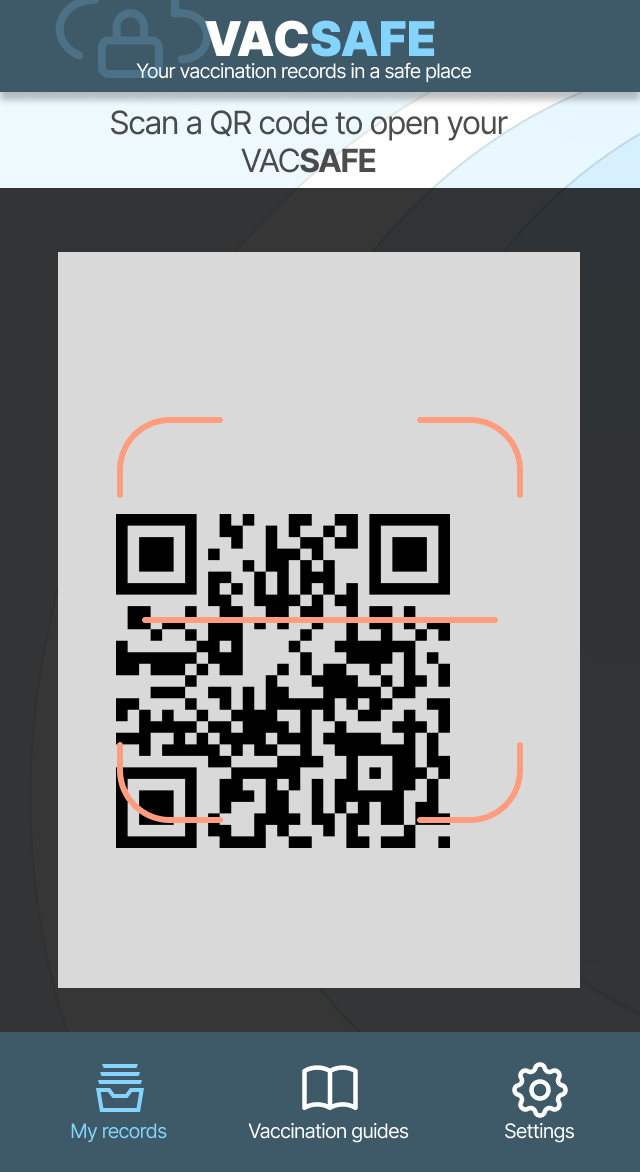
When the patient chooses "Start," a Vacsafe record is automatically created. An access QR code is generated. It guarantees the patient permanent access to their Vacsafe record even if they change phones. The QR code can be printed and kept in a safe place. It can also be given to their doctor to be kept in their medical file.
Possible extension: Allow the patient to create secondary accesses to their record that they can manage from the application. The accesses can be to the entire record or part of it, in read or write mode. For example, during a trip, a specific entry can be shared with authorities.
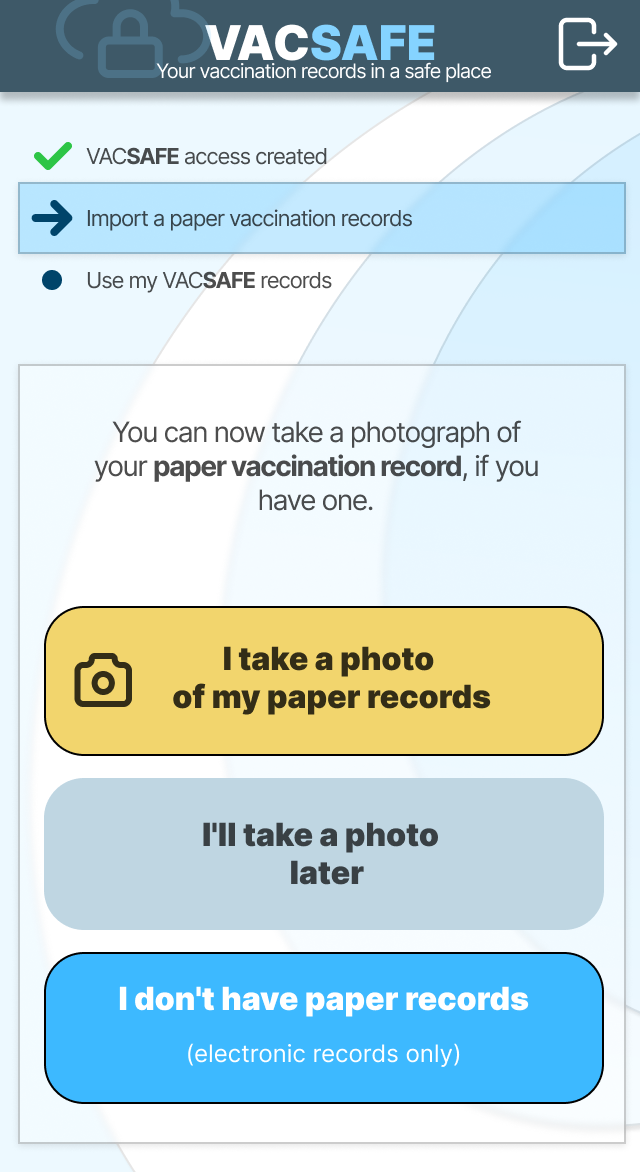
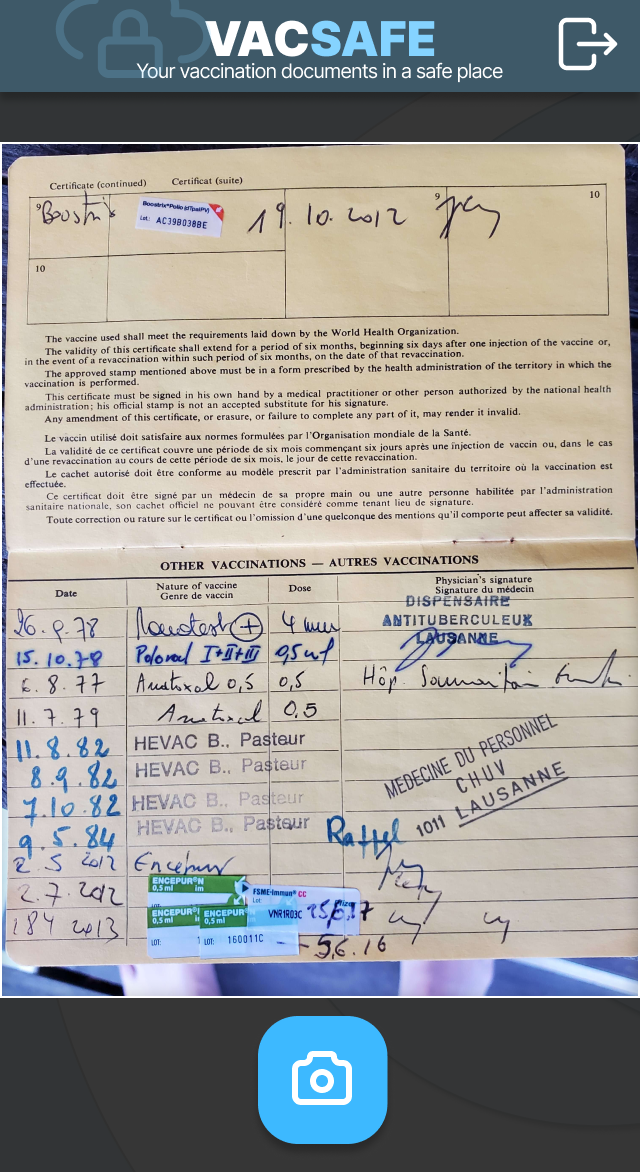
The import can be done simply by taking a photo of the paper record.
Possible extension: The image of the vaccination record can be analyzed by AI to automatically extract all the vaccination entries present.
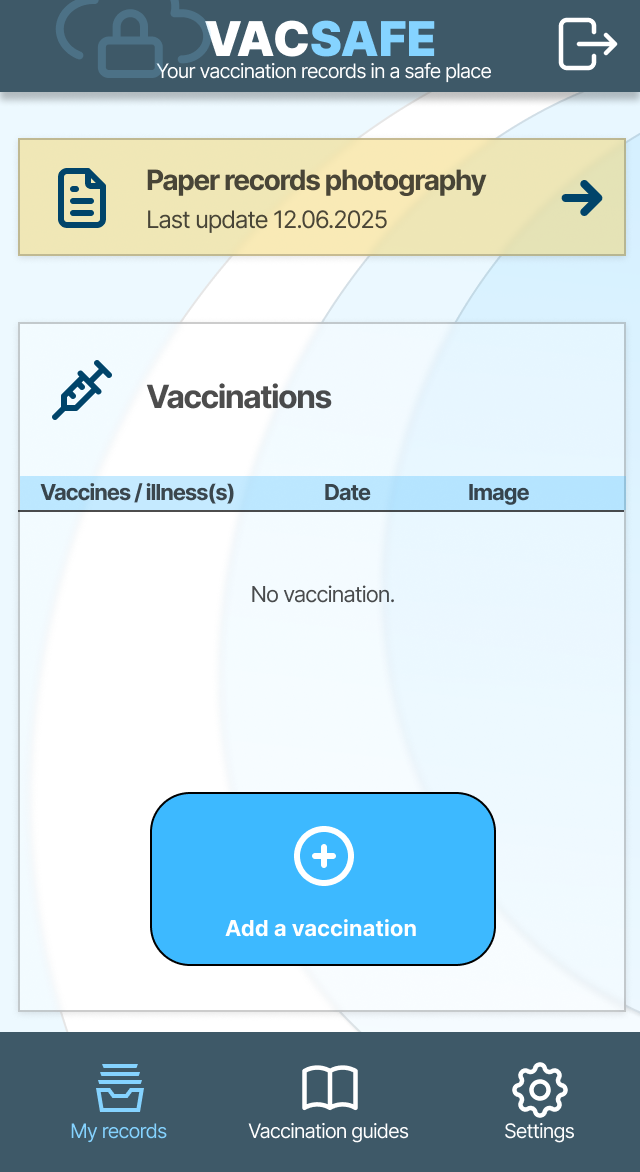
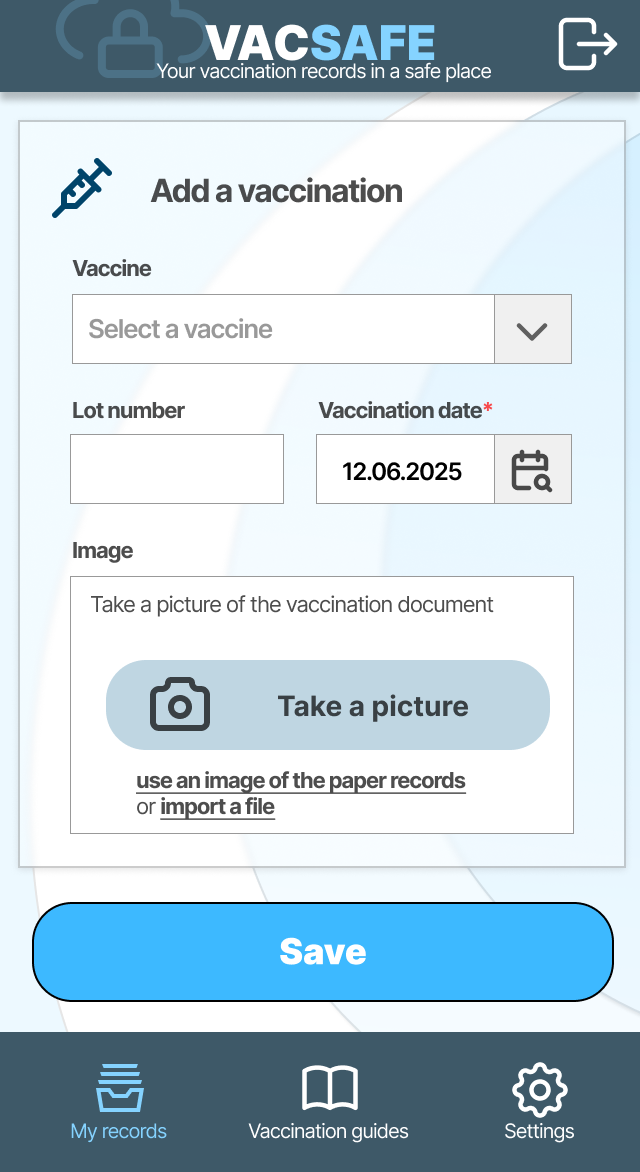
Adding a vaccination is done on a dedicated screen where the patient can enter information related to the vaccination with the help of their doctor.
Possible extension: Allow the patient to link official documents to their vaccination, such as an international vaccination certificate.
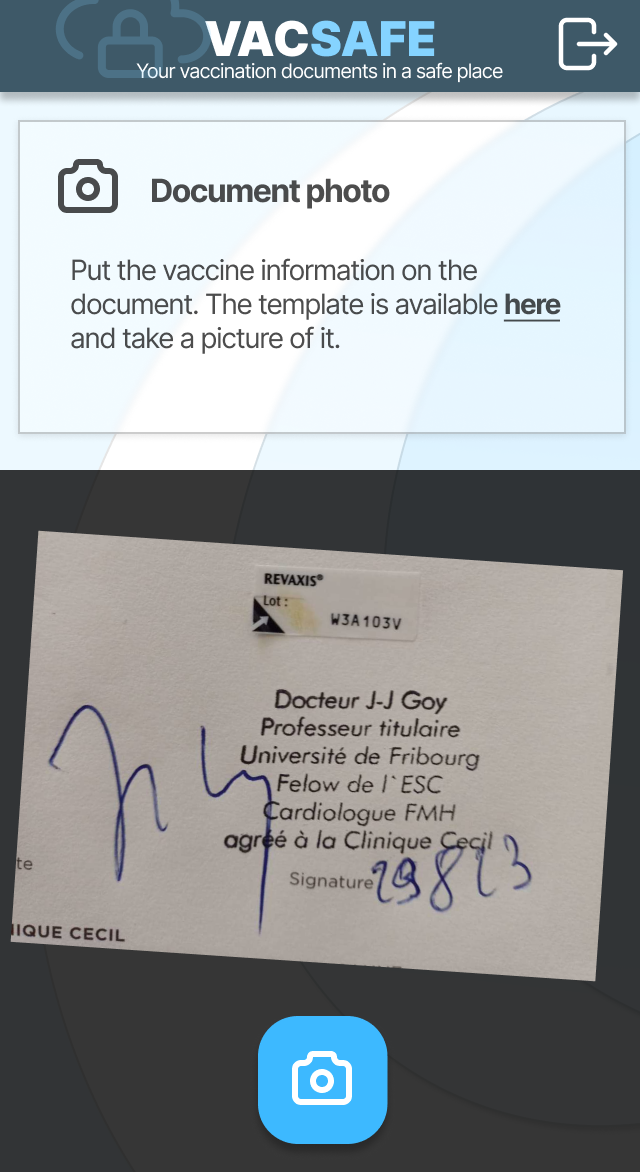
The doctor or nurse signs and attaches the batch number on a paper that is then photographed by the patient. A template is also provided in the application to facilitate this step.
The presence of the photograph allows for the verification of the vaccination information entered by the patient and identifies the doctor responsible for the vaccination (the photograph of the paper record can serve the same purpose if it contains the vaccination in question).
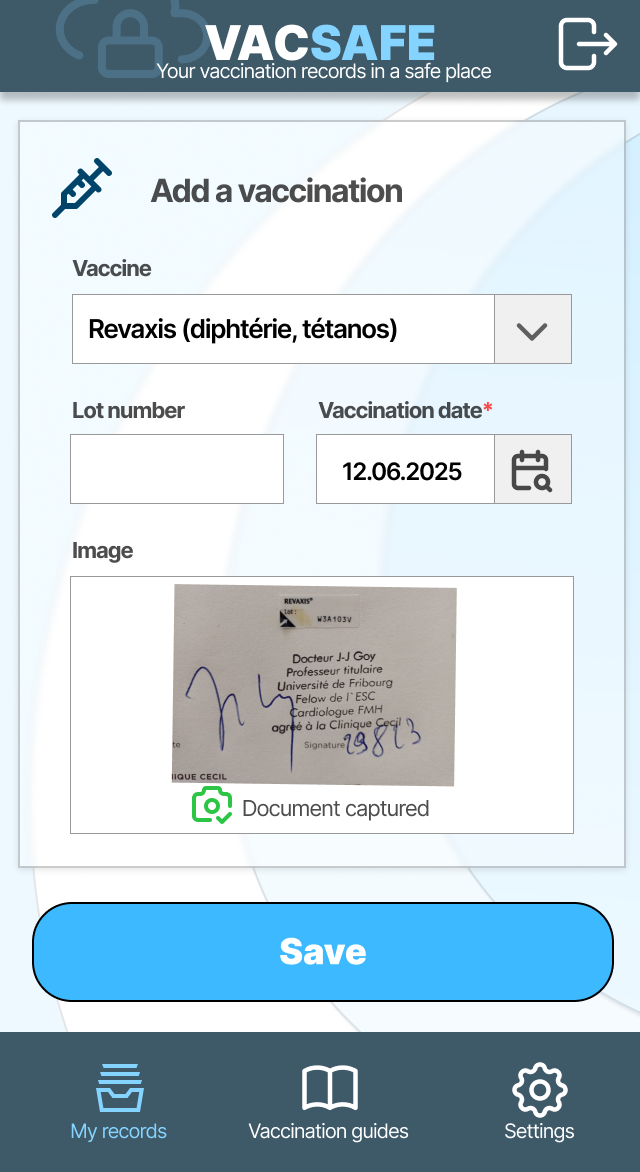
The patient can verify the data with the help of the doctor before saving their new vaccination.
Possible extension: When photographing a new vaccination, the name of the vaccine and the batch number can be automatically extracted from the photo.
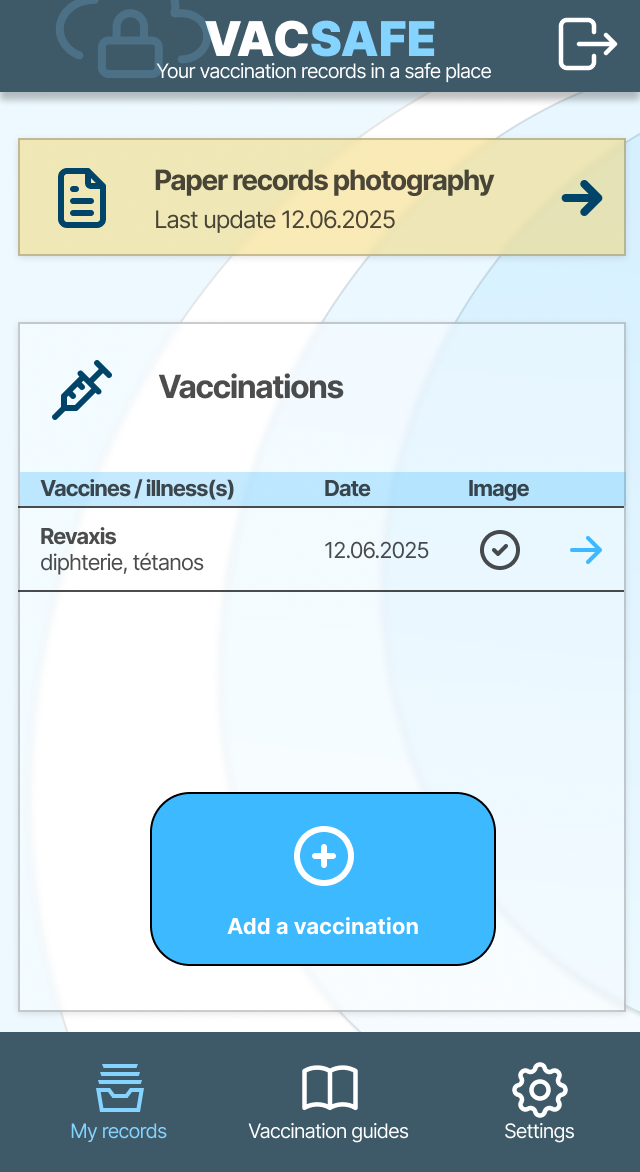
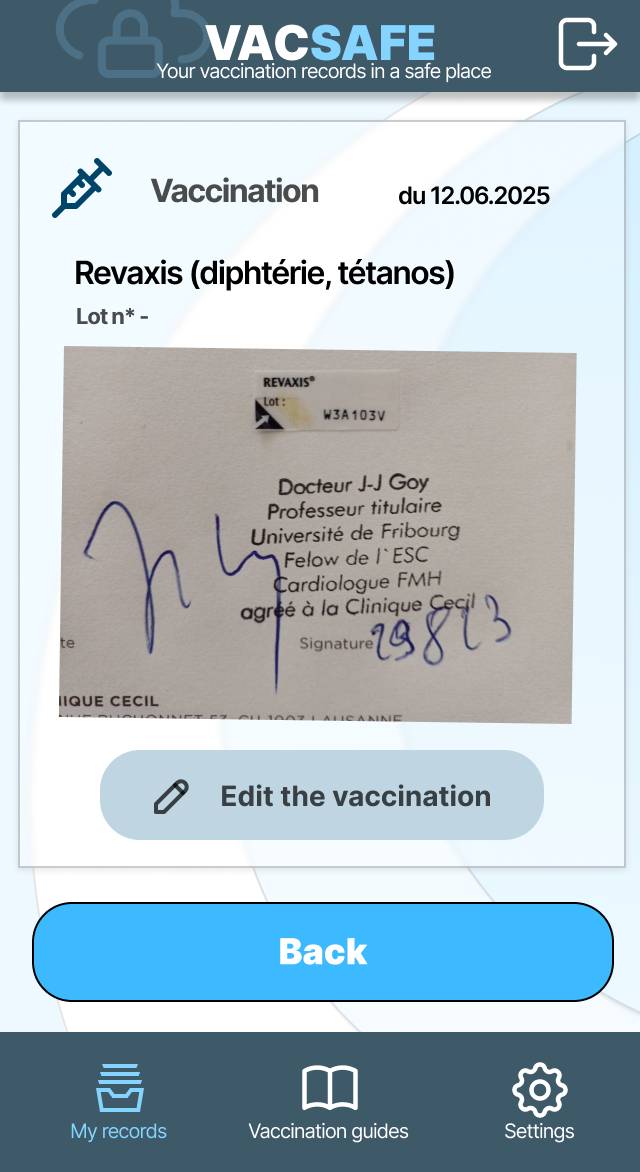
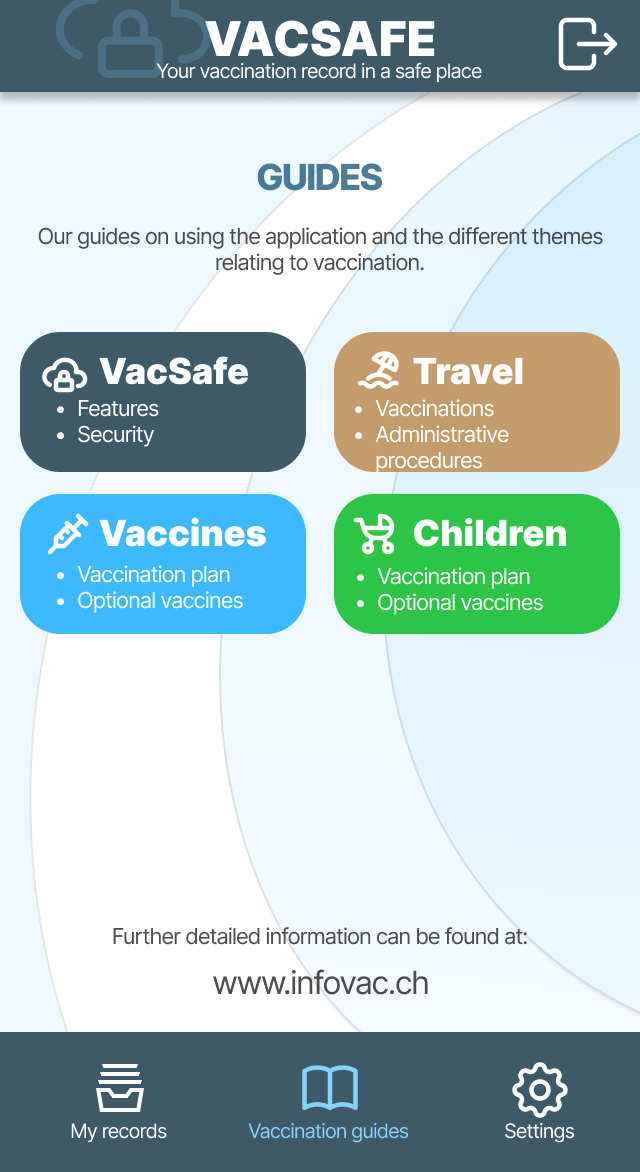
The application gathers guides and information related to vaccination on a directly accessible page.
Possible extension: The content of the guides and information page can be customized based on the country, language, and specifics of the patient.
Application Extensions
Starting from the base application, it is possible to extend VACSAFE's features in several ways to increase its utility and reach. Here are the additional functionalities envisioned at this stage:
- Data extraction from photographs
- Adding vaccination via digital doctor signature
- Tracking the vaccination schedule
- Guides related to vaccination
- Linguistic and regional adaptations
- Vaccination appointment scheduling
- Export and print
- Sharing and managing access
Other improvements can also be made based on user feedback.
1. Data extraction from photographs
Photographed documents by the patient can be analyzed by AI to extract vaccination information. This process is facilitated by using the vaccination template provided by the application.
From the extracted data in the documents (vaccine, batch number, etc.), it is possible to associate other available data from databases such as diseases covered by the vaccinations, effective duration of the vaccine, etc.
Data extraction from photographed documents is the most practical solution to associate structured data with a vaccination (the other being manual entry). These structured data allow the application to offer the patient more advanced features such as tracking the vaccination schedule or analyzing necessary vaccinations for travel to a given country.
2. Adding vaccination via digital doctor signature
The base application is designed to work without requiring doctors and nurses to be equipped with the VACSAFE system. However, it is also possible to create a system where the doctor has the application on their device and scans a QR code on the patient's phone to add a digital signature to the vaccination entry.
Integration with the IT systems of clinics and hospitals is also possible, allowing the record to be updated automatically.
3. Tracking the vaccination schedule
Based on the vaccinations present in the records, the patient's personal data, and the treatment plan in effect in the patient's region, the application can provide indications on recommended vaccinations.
Other services can be associated with this information, such as reminders in the form of notifications when a vaccination is necessary or recommended, or organizing the vaccination with a competent provider.
4. Guides related to vaccines
Several guides can be integrated into the application:
- General guides
- Children's vaccination plan
- Travel
4.1. General guides
Integration of information and guides on vaccination.
For example:
- Its history;
- Why it is important;
- Information on the methodology of clinical trials and the evaluation of risks and side effects;
- The state of progress of infectious diseases.
4.2. Children's vaccination plan
Parents can have their children's vaccination records and access a complete guide for tracking the vaccination plan. The tracking is adapted to children and directly visible in the parents' application.
4.3. Travel
During travels, the patient enters their destination country and the application advises them on the necessary vaccinations.
5. Linguistic and regional adaptation
To be widely used, the application can be localized to new regions.
This includes support for:
- New languages;
- Diseases present in the geographical regions;
- Vaccination legislations of different countries;
- Collection of required documents according to the countries.
Once the internationalization framework is established, adaptation to different regions can be added progressively based on international collaborations.
6. Vaccination appointment scheduling
The application can offer ways to contact and/or schedule appointments with organizations providing vaccination-related services.
This may include:
- A doctor or pharmacy capable of administering the vaccination themselves;
- A laboratory to perform tests to determine vaccination needs when the vaccination history is incomplete;
- An official service when required for certain vaccinations.
7. Export and print
The VACSAFE vaccination records is not intended to lock the patient into a system. Therefore, it offers the patient the possibility, at any time, to export their vaccination record in an open format. They can also print a document that can be used in the same way as the paper vaccination record.
8. Sharing and managing access
In the base application, the patient has a QR code to access their vaccination record. To enable sharing, a feature can be added. With this, the patient can generate new QR codes and share them with third parties (e.g., their doctor).
The patient has an access dashboard where they can see the generated QR codes and the associated people. They can manage the rights (read, write) granted to each access and also remove them.
Another evolution can allow the patient to add authentication factors to enhance the protection of their data, such as a password, a pin code or an additional QR code.
Investment
To successfully finance the Vacsafe project, PBG System SA is seeking funds.
The estimated necessary funding is divided into two parts:
An initial investment of 250,000 CHF to cover the development of the basic application and its release.
A monthly cost of 6,000 CHF for its hosting, maintenance, and updates.
Extensions are subject to a separate estimate if applicable.
Contact: info@pbg-system.ch